Mythological Tales from Iran
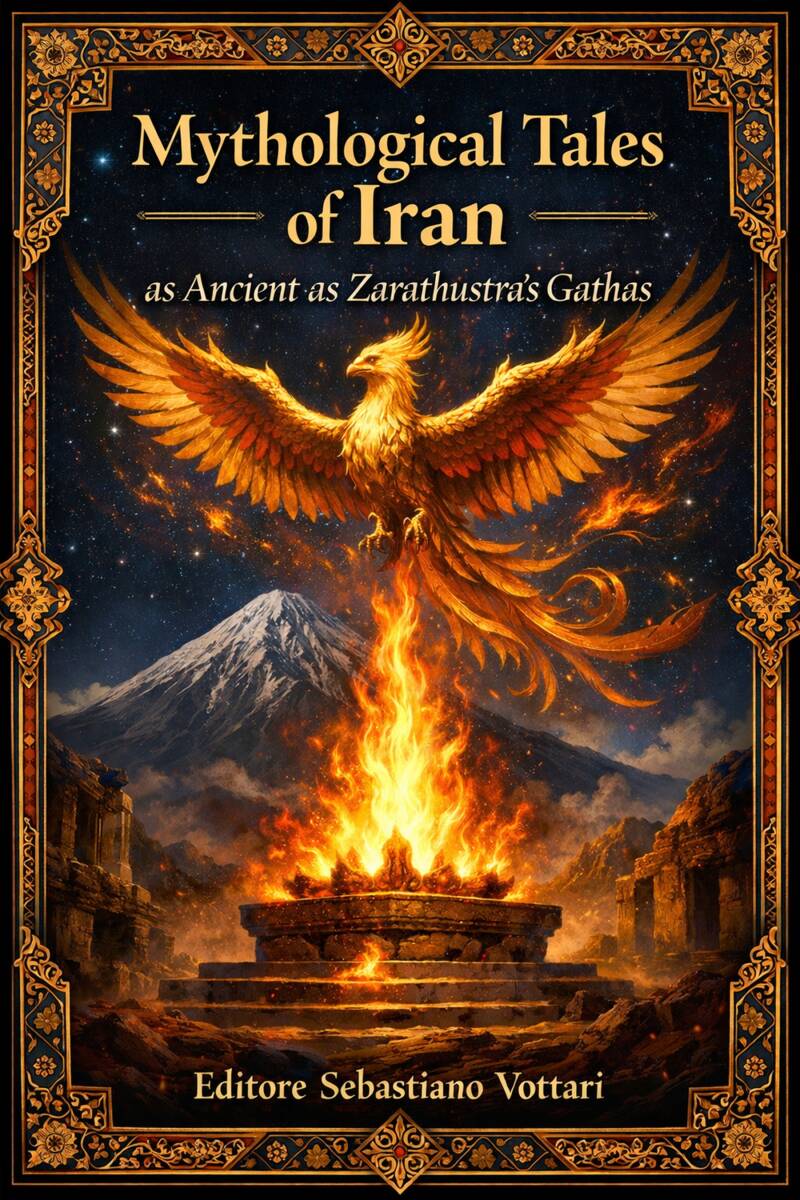
Seven mythological tales from ancient Iran, rewritten in their entirety for the contemporary reader.
Three thousand years before Iranian women shouted "Woman, Life, Liberty" in the streets of Tehran, a soot-covered blacksmith tore the parchment of lies in the face of a tyrant and raised his leather apron as a banner of revolt. His name was Kaveh. The tyrant had serpents on his shoulders that fed on the brains of the young. This is not modern fantasy: it is the founding mythology of Iran, as ancient as the Gathas of Zarathustra.
What you will find in this book:
Zahhak and Kaveh the Blacksmith — The birth of tyranny and the revolt of the common man that changed the history of an empire.
Zal and Rudabeh —A forbidden love between a white-haired warrior raised by a divine bird and a princess who throws her braids from a tower. From their union will be born the world's greatest hero.
The Seven Labors of Rostam — Lions, dragons, witches, and demons: seven deadly trials faced in seven days by Iran's invincible champion to save his blind and imprisoned king.
Bijan and Manijeh — Romeo and Juliet, a thousand years before Shakespeare. An Iranian knight and a rival princess, a dark well, and a love that survives everything.
Rostam and Sohrab — The most heartbreaking tragedy in world literature: a father and son who kill each other without recognizing each other.
The story of Siyavash —the pure prince who walks through fire unscathed and chooses martyrdom rather than breaking a vow. From his blood, a red flower grows.
Rostam and Esfandiyar — The supreme philosophical clash: blind obedience to the state versus individual freedom. Two positive heroes forced by fate to destroy each other.
These stories come from the Shahnameh , Ferdowsi's "Book of Kings," the largest epic work ever written—longer than the Iliad and the Odyssey combined. But their roots go much deeper, to the time when Zarathustra composed his sacred hymns and taught humanity that good and evil exist, that human beings are free to choose between the two, and that unjust government has no divine legitimacy.
Why this book, why now.
Iran is now at the center of the world. But behind the news images lies a millennia-old civilization that invented human rights with Cyrus the Great, conceived ethical dualism with Zarathustra, created heroes who weep after killing and tyrants who tremble before an unarmed blacksmith. Knowing these stories means understanding what burns in the hearts of a people who, for three thousand years, have never stopped fighting for justice.
This book is for those who want to look at Iran with new eyes—not with fear, but with the respect due to one of the greatest civilizations in human history.