The Library of Hidden Emotions
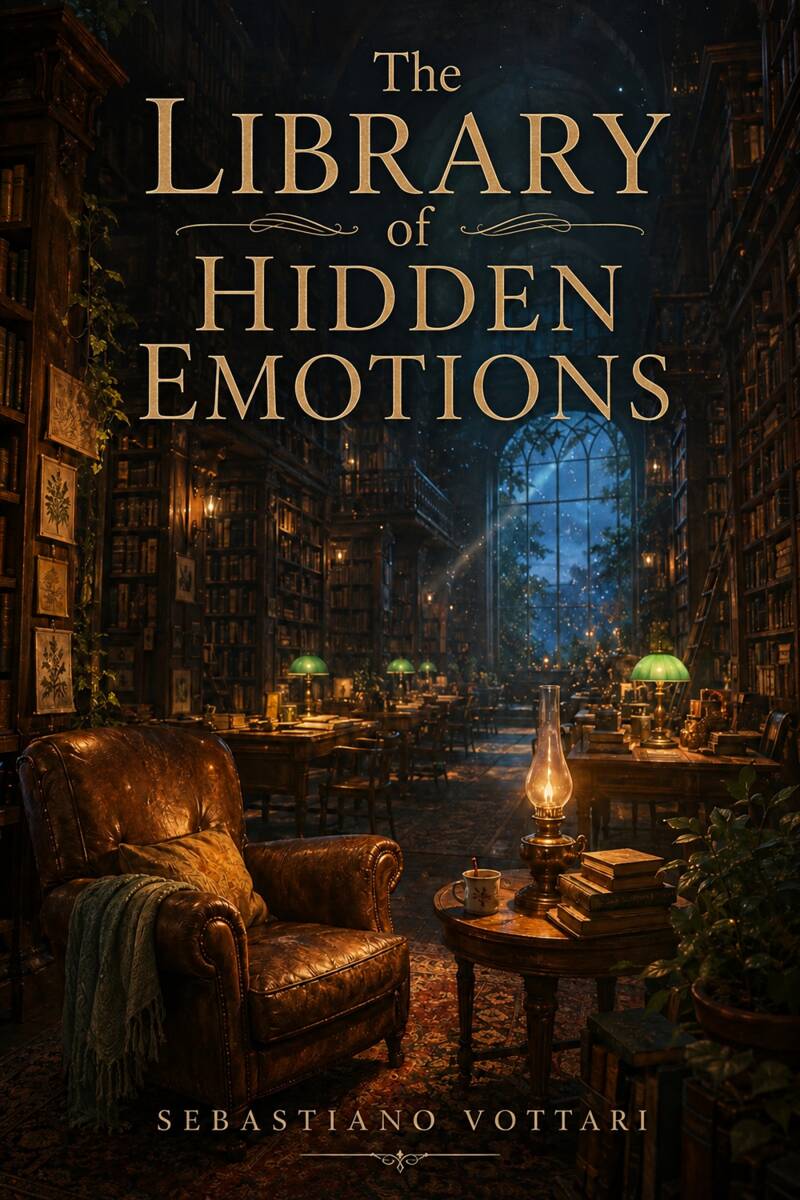
No one taught us the words for what happens inside.
We've learned to name capital cities, rivers, and the bones of our bodies. But when something tightens our chest at three in the morning, we often can't tell if it's fear or sadness, anger or nostalgia. And a nameless emotion rules us from the darkness: it dictates the tone we use, the messages we don't send, the doors we slam.
A named emotion, however, changes state. From fog it becomes a room. A place with walls and a door: a place you can enter and from which—we always forget this — you can also exit.
Names are handles. They're used to open doors.
One evening, on a street you walk by heart, you find a door you'd swear was never there. On the plaque, a subtle inscription: "Library of hidden emotions. Open when needed ." Inside, a librarian who doesn't ask you what you're looking for. She asks how you are. And truly waits for an answer.
Here, the books aren't catalogued by author or genre, but by what they make you feel. Eleven rooms, eleven emotions:
- The Room of Anger — anger as a boundary, not just as an explosion.
- The shelf of Nostalgia — the sweet pain of things that don't add up.
- The Archive of Fear — fear as guardian, not just as enemy.
- The Table of Sadness — sitting with what weighs you down, without rushing to console.
- The Joy Department — the joy that doesn't need to be justified.
- The Corridor of Shame — when we think we're wrong.
- The Waiting Room — everything that hasn't arrived yet.
- The Garden of Hope — a small, but stubborn light.
- The Case of Jealousy — the desire to be chosen.
- The Silence of Solitude — being alone without feeling abandoned.
- The Room of Love — not just loving someone, but learning to stay open.
Upon entering, you'll receive a blank notebook. Each room will leave a question to take away and a page to fill in. At the end, the notebook is returned.